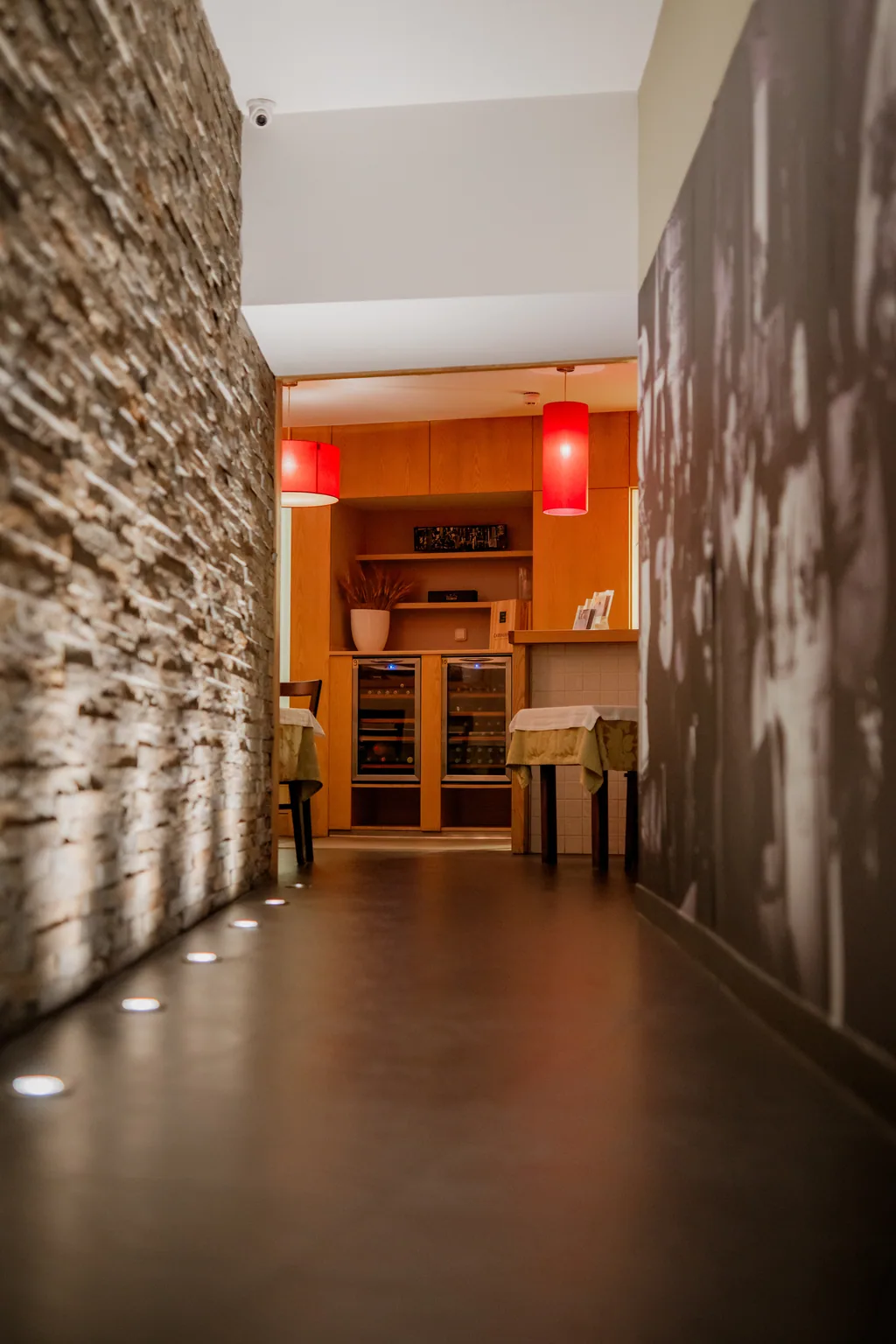
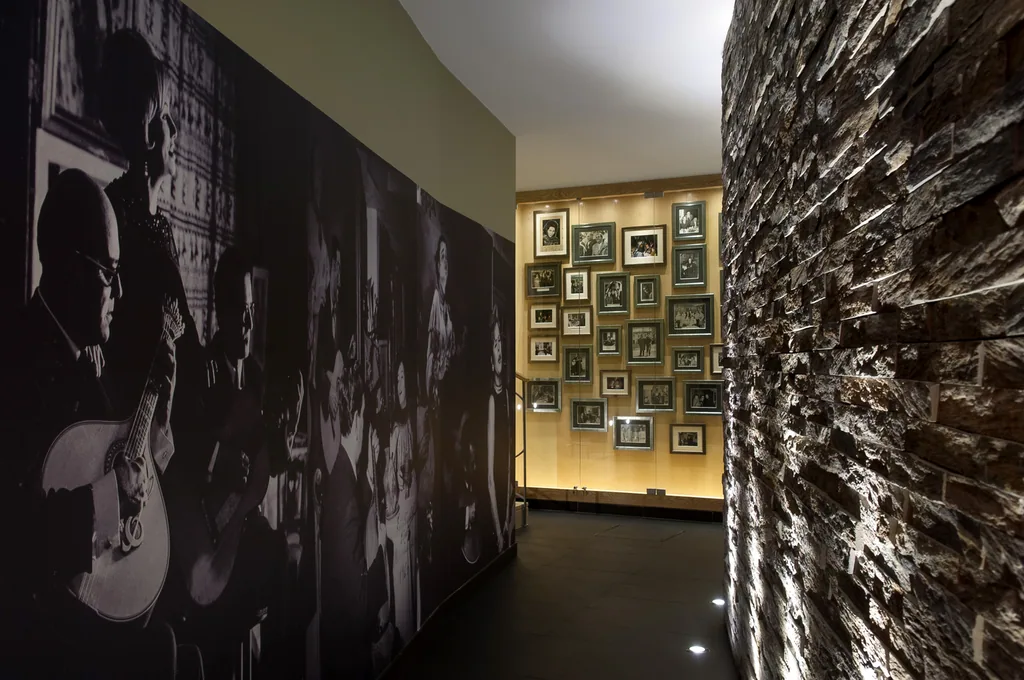
Stone-walled corridor with grazing light leading to the fado room

A fado house in Bairro Alto, since 1937

About Us

Three floors in Bairro Alto, exposed stone and a whole wall of people who have sung here since 1937.

How it began

Founded by Armando and Maria de Lurdes Machado in 1937. In the same room for ninety years.

Armando played the viola de fado — the acoustic guitar that lays down the chords. Maria de Lurdes, a fado singer. They opened the house in a small tavern on Rua do Norte. It first went by the name Barrete Verde. The name didn’t last long.

Adega Machado was the second fado house in Bairro Alto. It was the first to hold a performance every night.

Who sang here

Amália Rodrigues was family. Godmother to two of the five Machado children, she would come for late suppers after her sets at Café Luso. She felt at home and often sang for the pleasure of it. One night, carried by the moment, she stepped into the street leading a parade; the diners followed. The Bairro Alto police, mistaking the group for an unauthorised gathering, stopped them in their tracks.

Alfredo Marceneiro sang here for the last time; it was the last place he was ever under contract. Mariza began her career in this same room, at seven years old. Carlos do Carmo, Fernando Maurício, Beatriz da Conceição, Maria da Fé, Celeste Rodrigues — Amália’s sister, who kept singing here almost until she was ninety — and many other names the walls remember.

How fado happens here

This is not a show. It is the house that receives those who come to sing. The line-up is chosen carefully, fado singer by fado singer. The nights are long, but they have their own rhythm: fado happens between courses, and the kitchen pauses when it begins.

Those who come to listen, stay silent. That is the rule of the house — and it is the only one.

Discover our menu

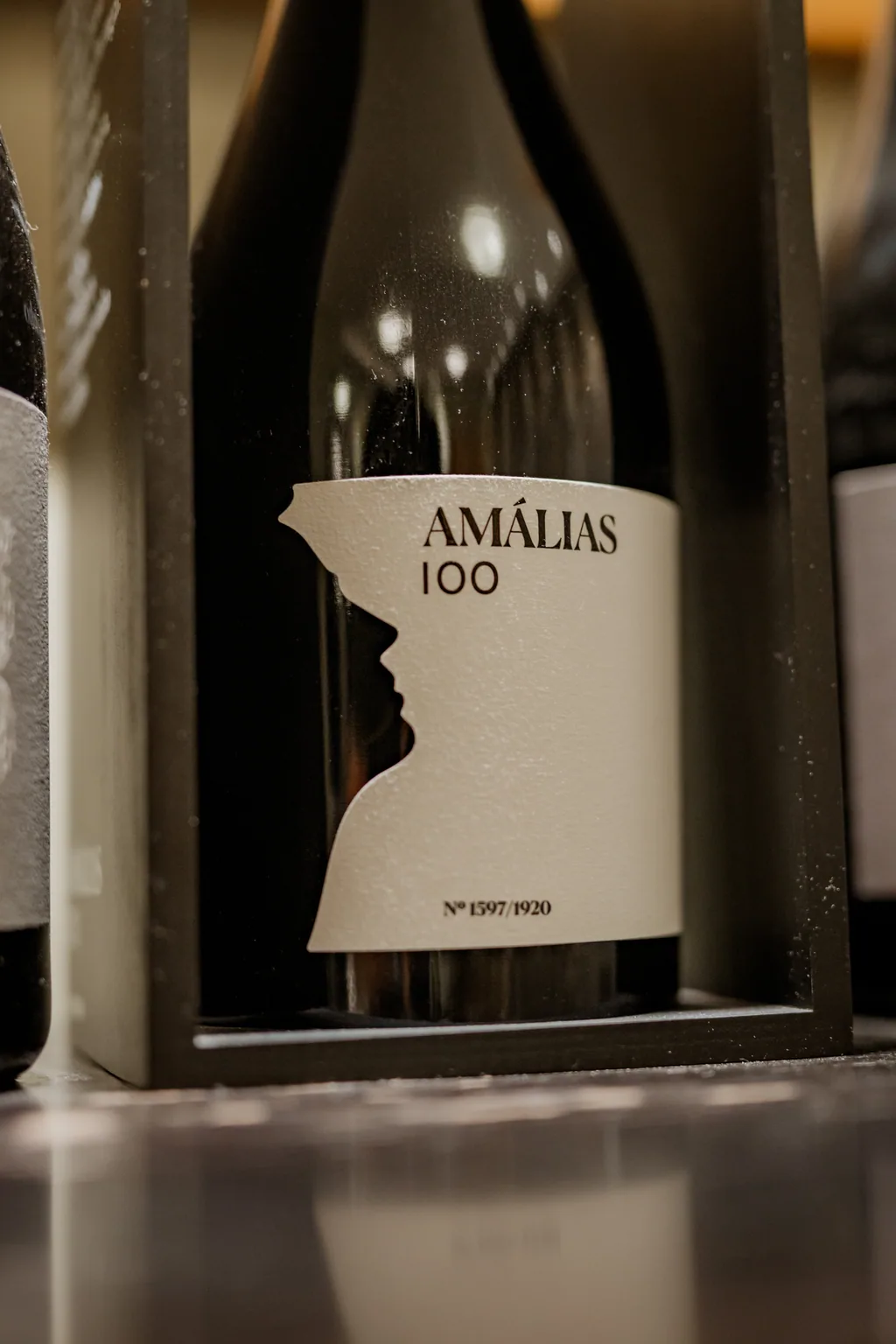
Bottle from the Amálias 100 edition with Amália Rodrigues’s silhouette on the label
Amálias 100: a numbered edition running to 1920 — the year Amália was born.
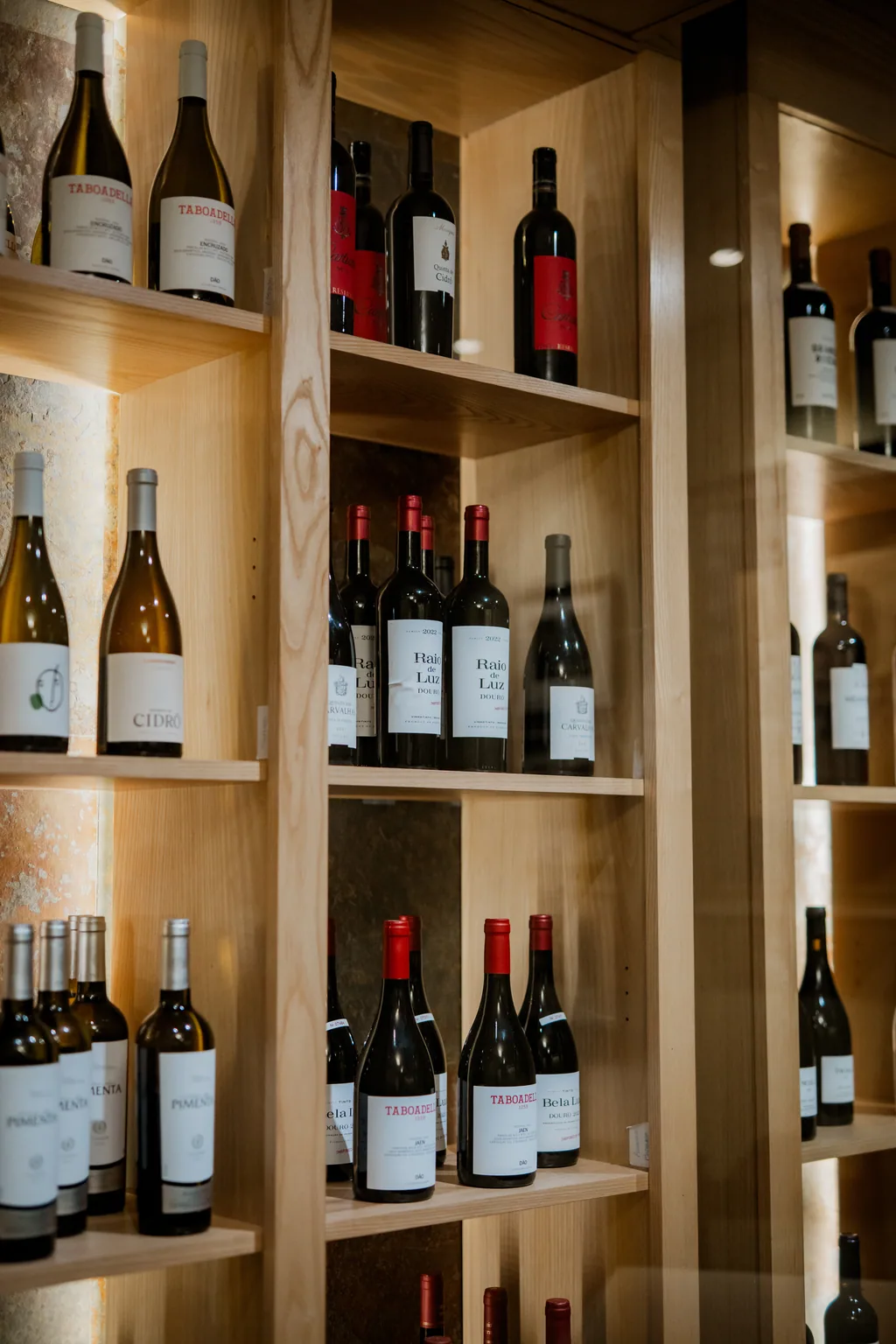
Wooden shelves lined with Portuguese wine bottles
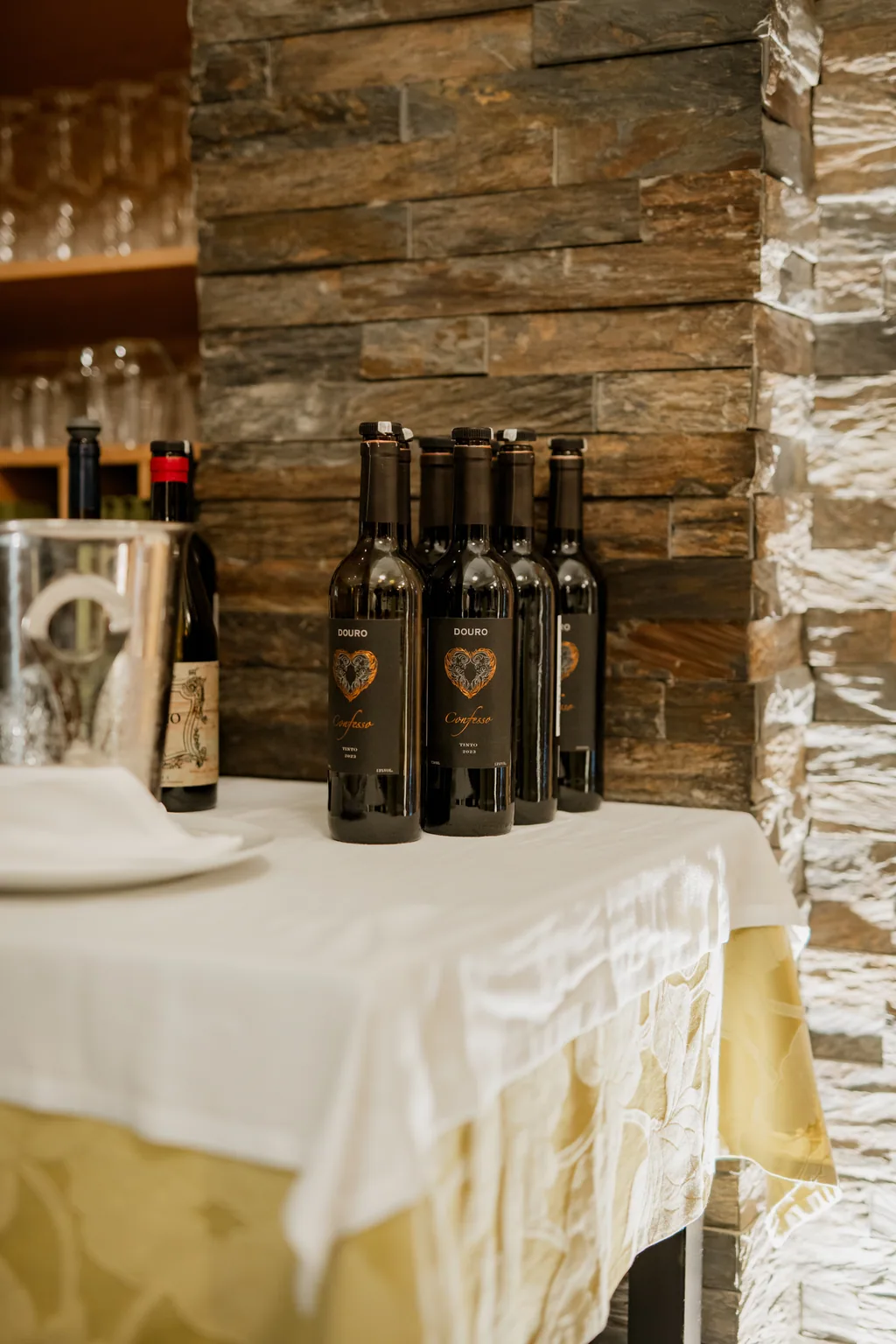
The cellar: almost all Portuguese, almost all meant for tonight.
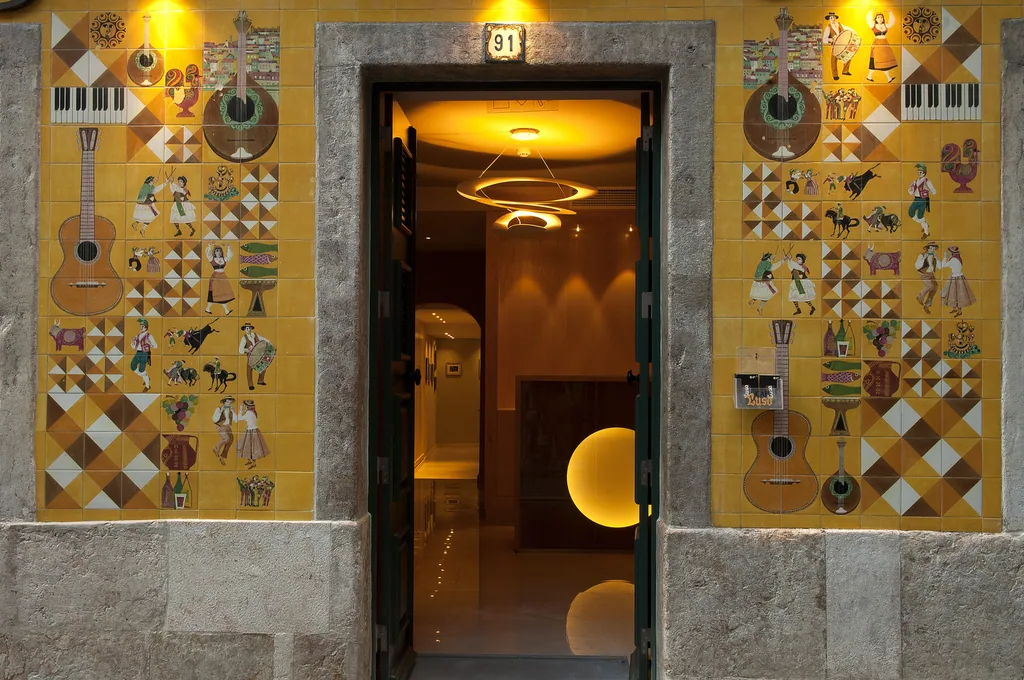
Open door at number 91 between tiled panels, the lit corridor beyond
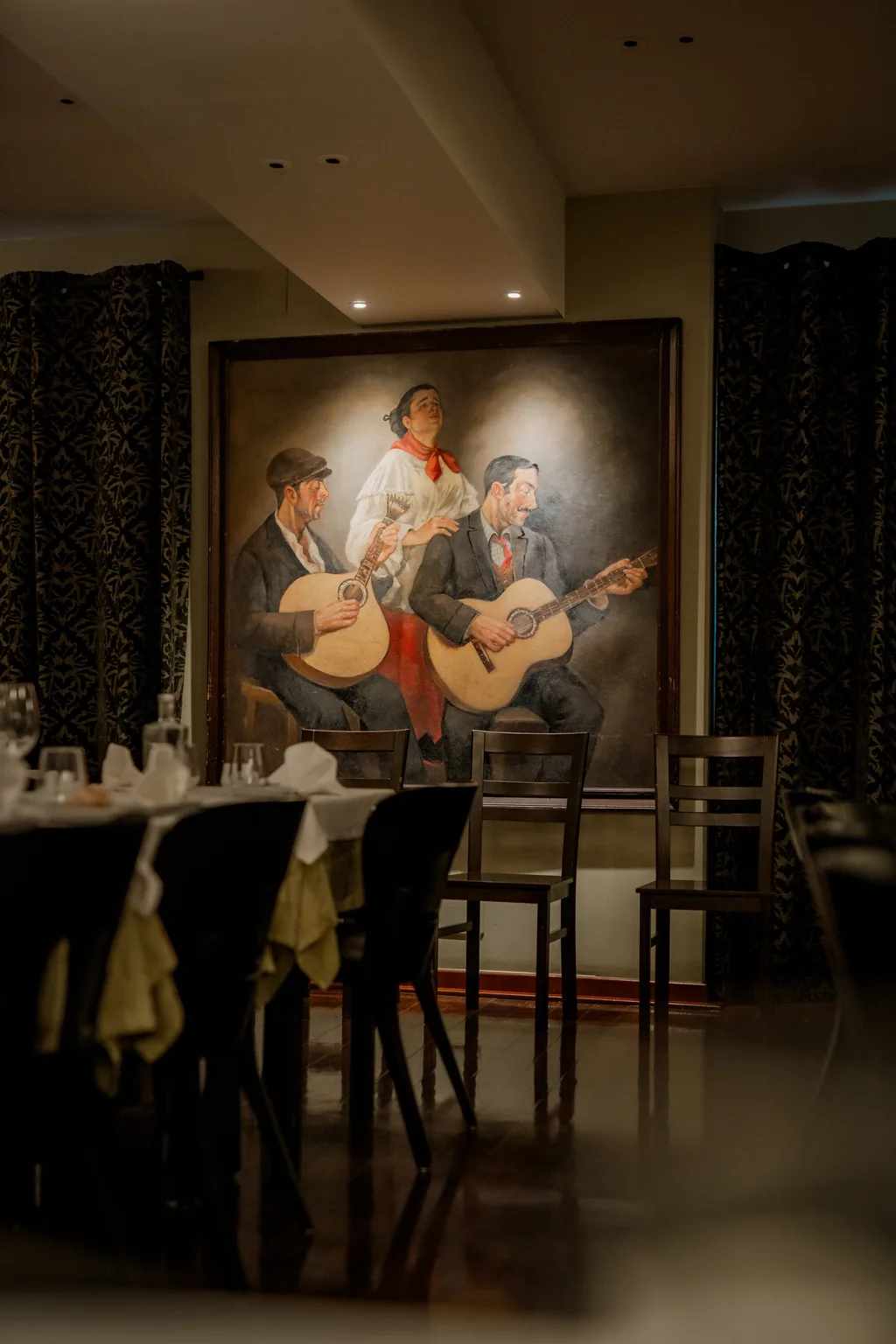
Painting of three fado musicians above the laid tables at Adega Machado
Nobody hung this painting
to decorate the room.
It was here before the tables.
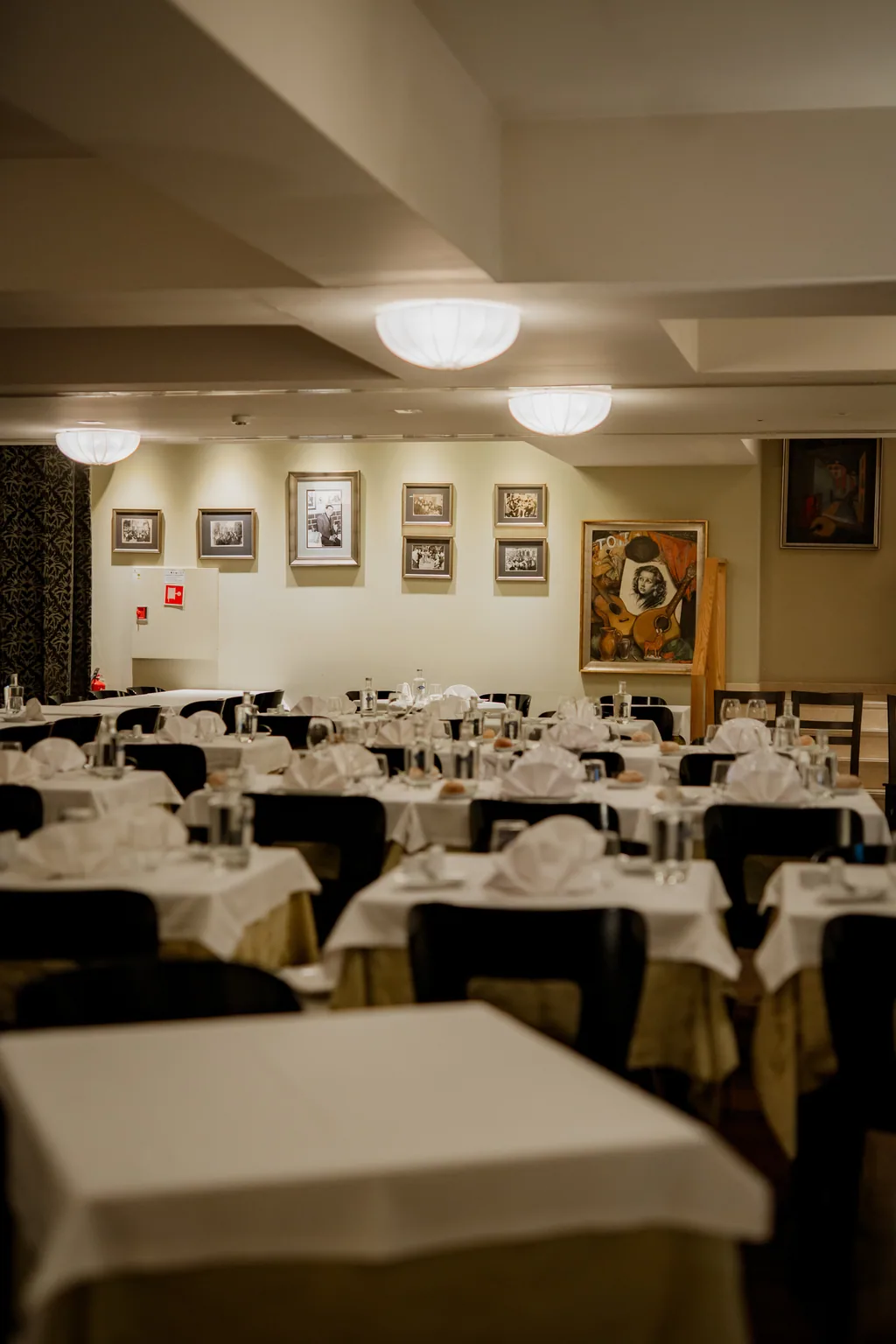
The main room · Rua do Norte, 91
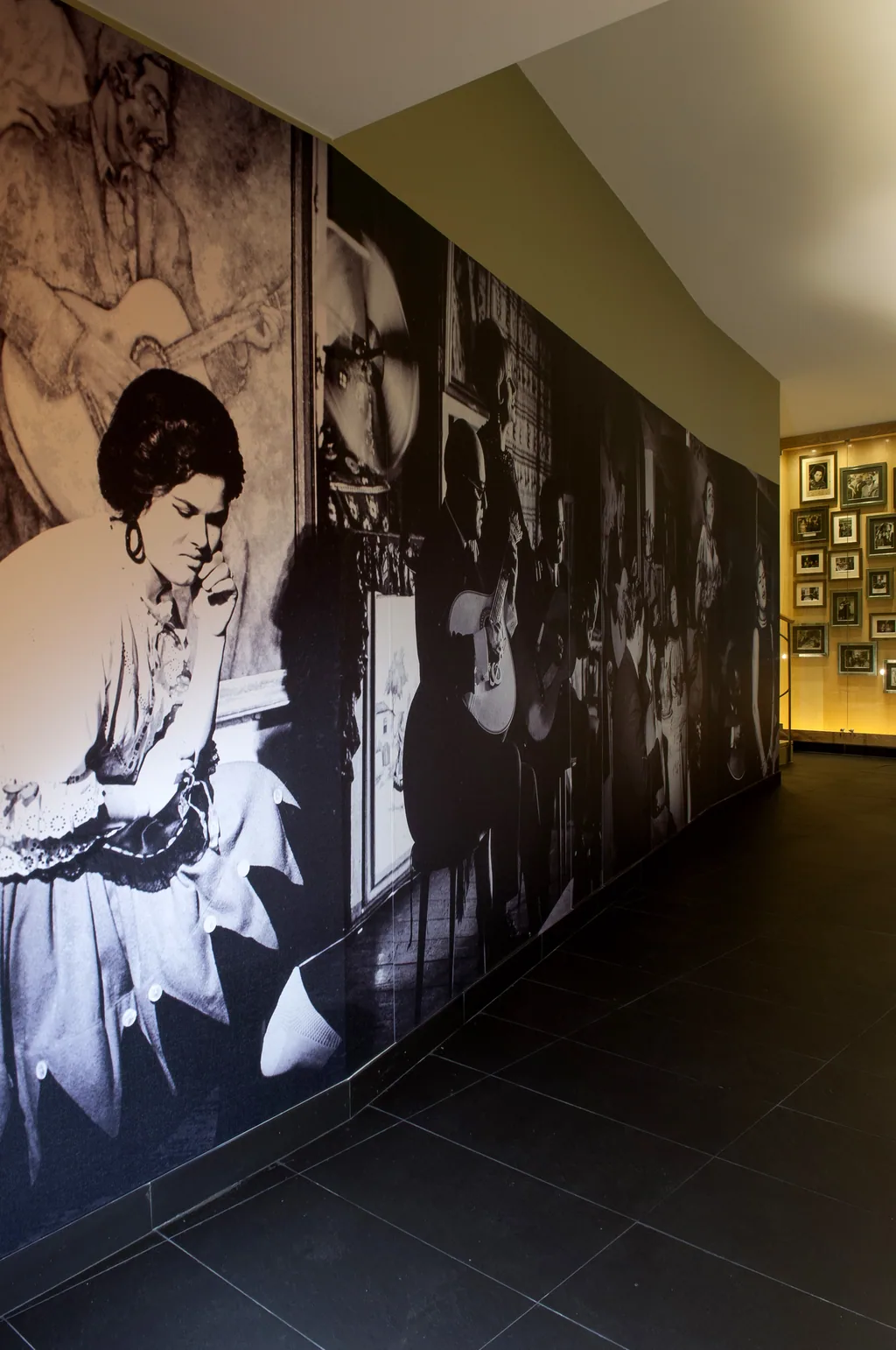
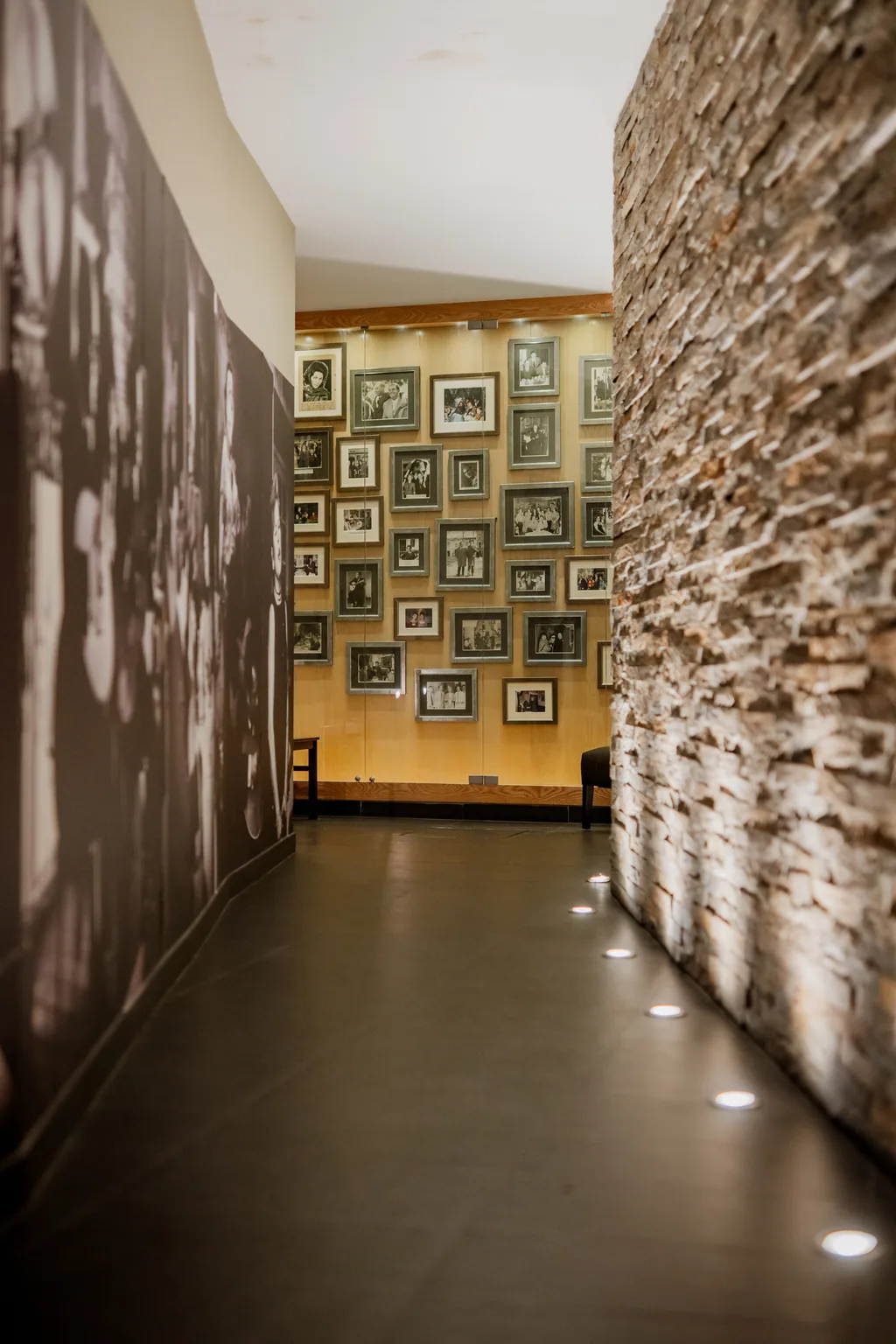
Corridor with a black-and-white mural of past fado singers and, at the end, the wall of framed portraits

The façade, the walls, the room

Three things stand the test of time in this house: the entrance panel, the collection covering the walls, and the room where fado is sung.

The façade

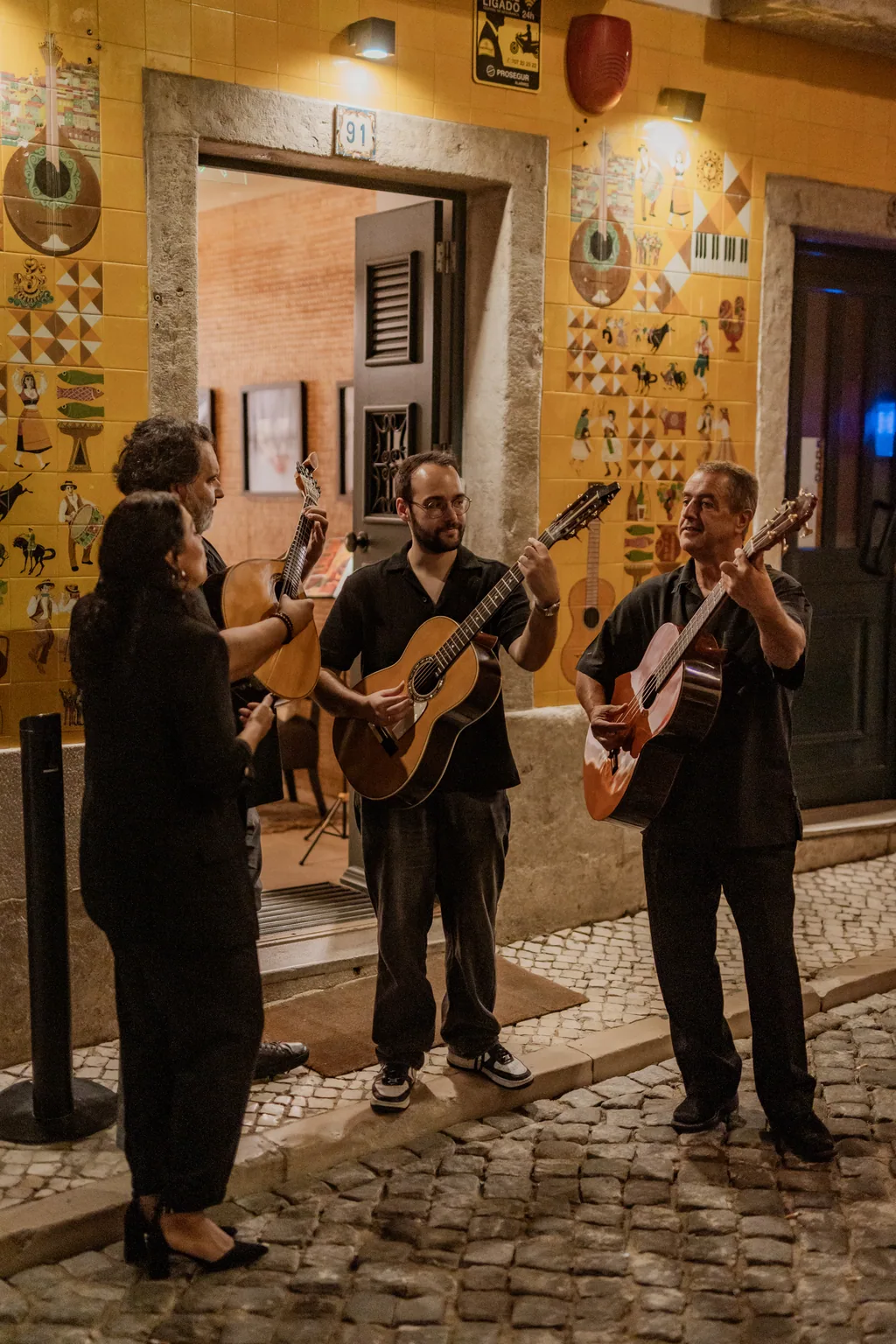
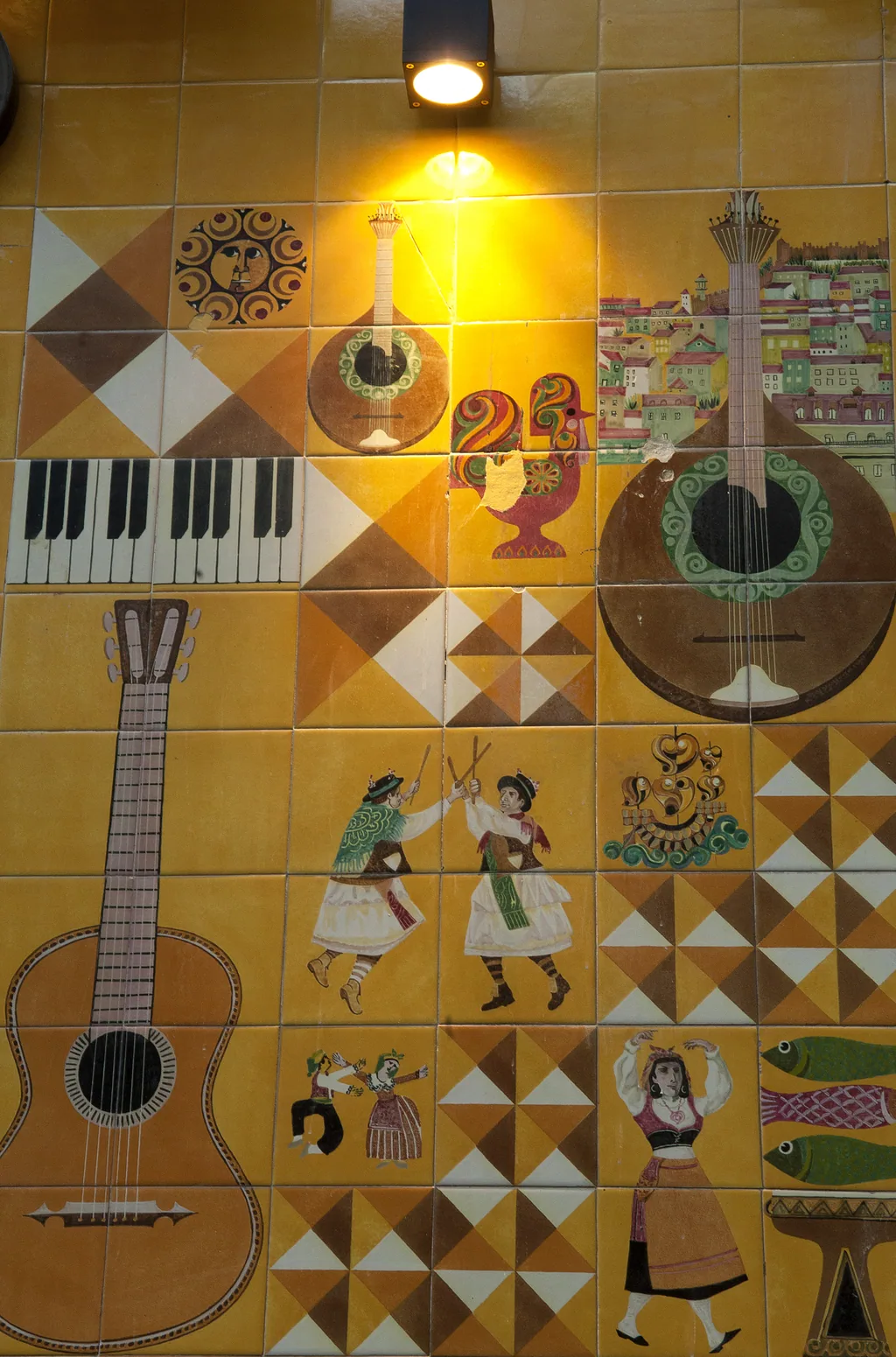
The tiled façade is by Thomaz de Mello — known as Tom — a Portuguese-Brazilian artist of the second modernist generation. He devoted the panel to Portuguese folk culture, fado, the Portuguese guitar and Lisbon itself. It is today a classified municipal heritage site.
The walls

More than a hundred photographs, paintings and caricatures from the Machado family collection fill the walls of the house. Each piece is a fragment of the history of fado — and of Lisbon — in the twentieth century.

The room

The room was fully renovated in 2012, after three years of work. From the old house, only the façade and the collection remain. The rest is new. The place where people sing is still the same.

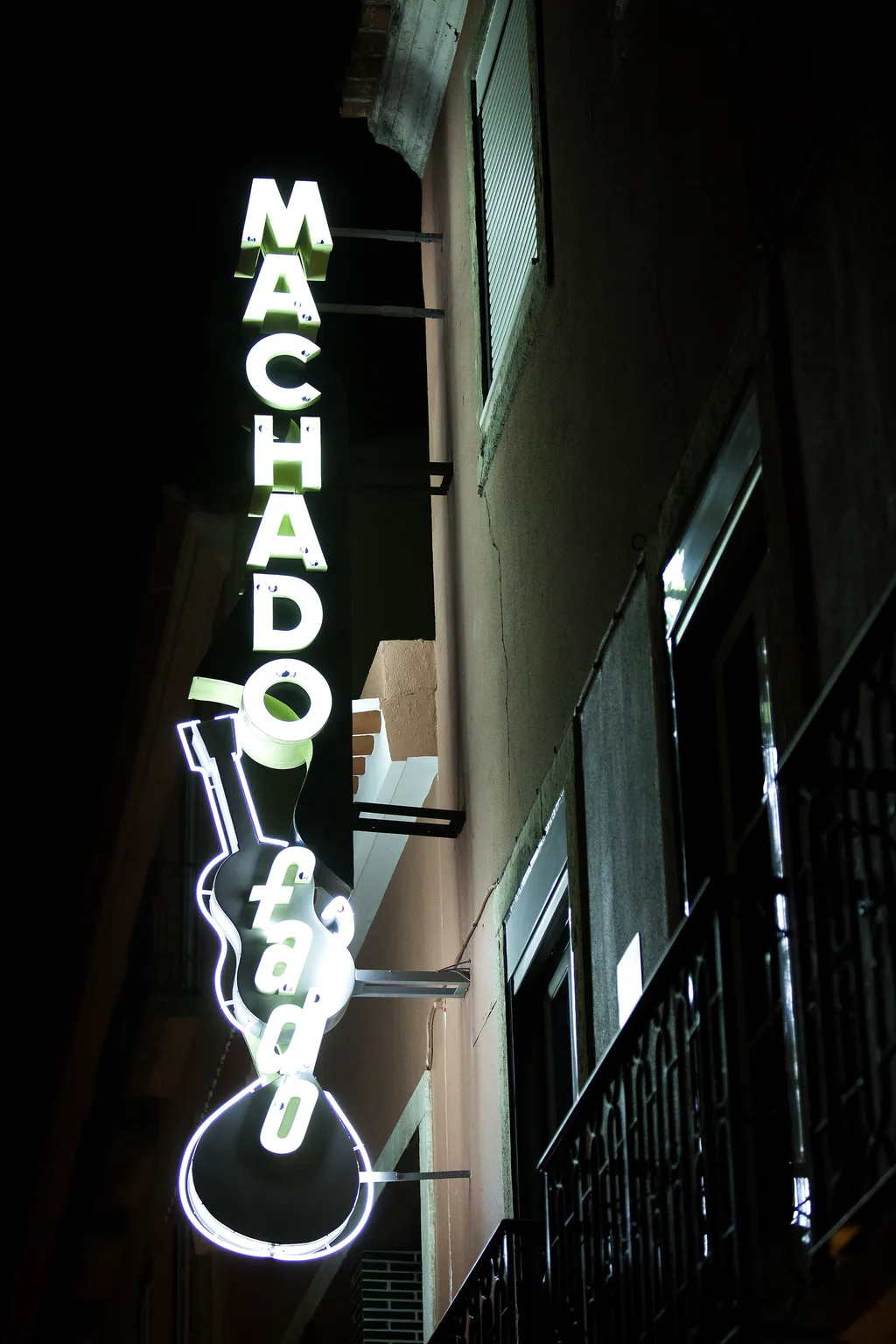
Vertical neon sign reading MACHADO with a Portuguese guitar, at night
Tiled façade panel with a Portuguese guitar, a mandolin and folk figures
Corridor mural with a fado singer’s portrait printed the full height of the wall
Three musicians beside the tiled façade of Adega Machado, in Bairro Alto
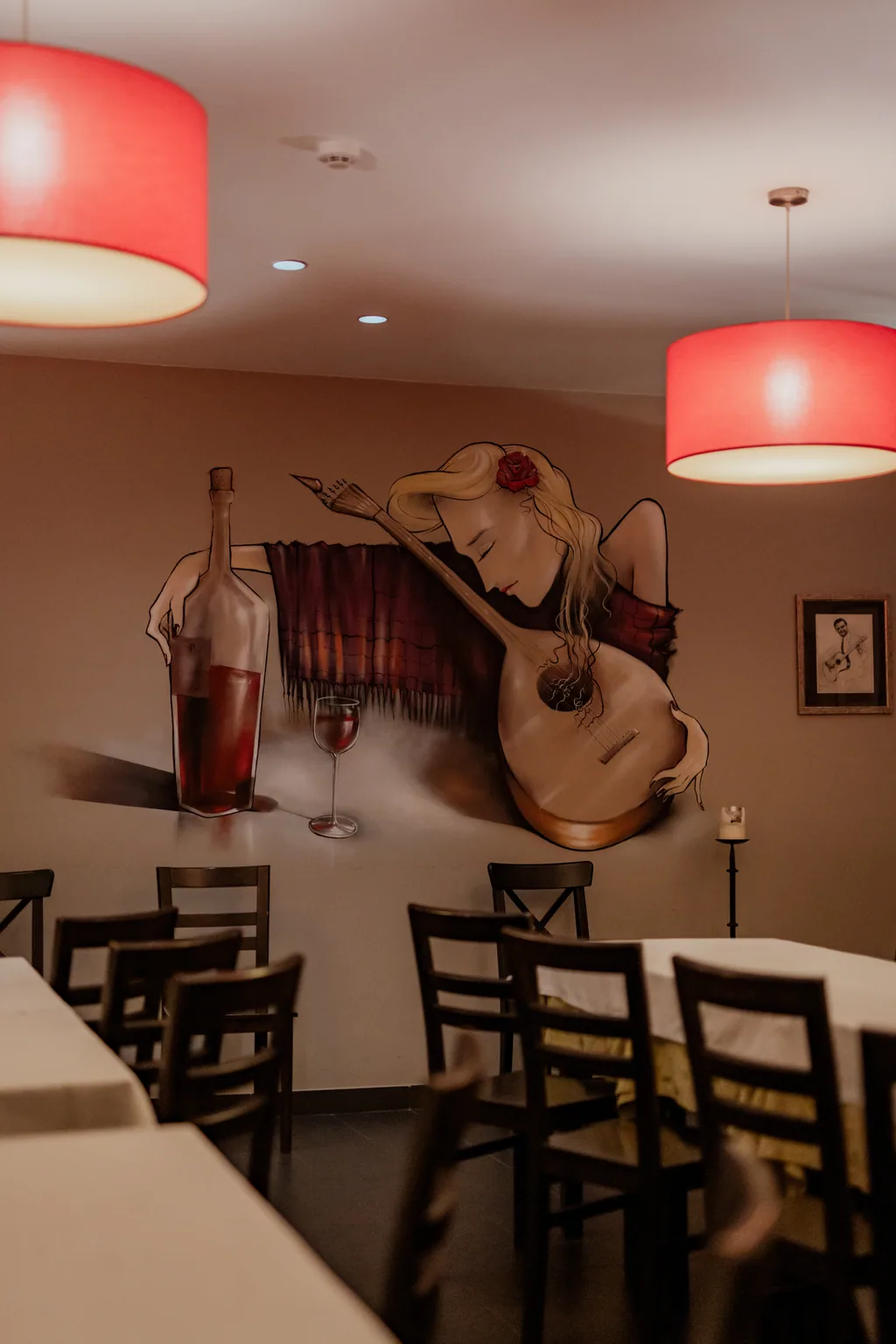
Room with red lamps and a mural of a fado singer with a guitar
Stone corridor with a red-lit room at the far end
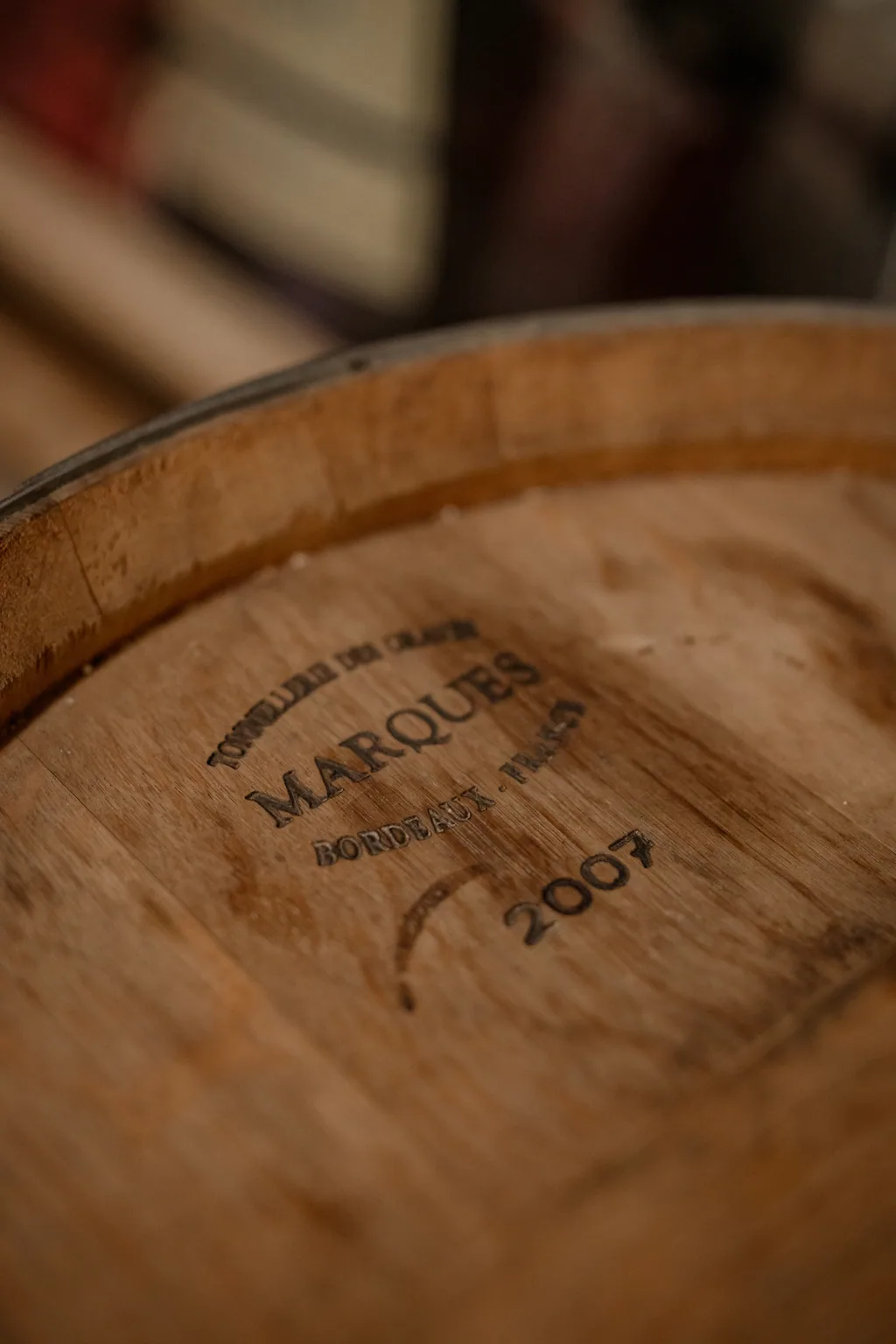
Top of a wooden barrel branded with the year 2007
Wide view of the main room with laid tables and paintings on the walls
Row of red wine bottles on the white cloth beside the stone wall

Book an evening at Adega Machado

Fado begins at 20:30. The kitchen opens at 19:00. There are few tables, and evenings fill up well in advance.

Book